Weekdays run on alarms, commutes and meetings, and weekends fill with errands nobody planned. Many people go months without a full day outdoors, let alone two in a row. A Quebec fishing camp gives you what a normal calendar rarely allows, which is a stretch of uninterrupted days on open water.
- Busy Routines Leave Little Room for Open Water
- The Pavement Ends Long before the Lake Begins
- Choosing between Main Camp Comfort and Outpost Privacy
- Steady Fishing and Good Company Shape Each Day
- Lasting Value from Water Protected by Law
- Practical Points for Picking the Right Camp
- Days That Answer to Nobody but You
The fix starts with distance. A Quebec fishing camp deep in restricted-access bush country removes most of what usually interrupts a day off, from traffic to drop-in visitors. You decide when to fish, when to eat and when to sit on the shore doing nothing at all. The week finally belongs to you.
Busy Routines Leave Little Room for Open Water
Outdoor Time Gets Squeezed Out First: Outdoor time is usually the first thing a crowded routine squeezes out, because it needs whole days rather than spare hours. A quick evening cast after work rarely feels like a break. Outfitters who have hosted the same anglers for decades routinely hear guests say this week is their only real time outdoors all year.
Mental Rest Needs Real Separation from Work: Real rest depends on stepping away from work mentally as well as physically. Researchers call this psychological detachment and link it to better recovery from job stress. A phone that keeps pinging with emails and group chats makes that separation hard to achieve, even on a lake hours from the office.
The Pavement Ends Long before the Lake Begins
Gravel Replaces Pavement past the Last Town: Reaching a remote fishing lake in Quebec usually means leaving paved highway for a gravel logging road. Here that road runs roughly 60 miles (100 km) past the last town, through boreal forest and very little else. By the end of the drive, the pace of home already feels far off.
A Controlled-Access Zone Keeps the Lake Quiet: A controlled-access zone regulates travel on its roads, which usually keeps lakes inside it quieter than waters near towns. This 15-mile lake has one lodge, no cottages, no other operators and no public access. Guests share it with the moose and each other, and the setting feels removed from daily life because it truly is.
Choosing between Main Camp Comfort and Outpost Privacy
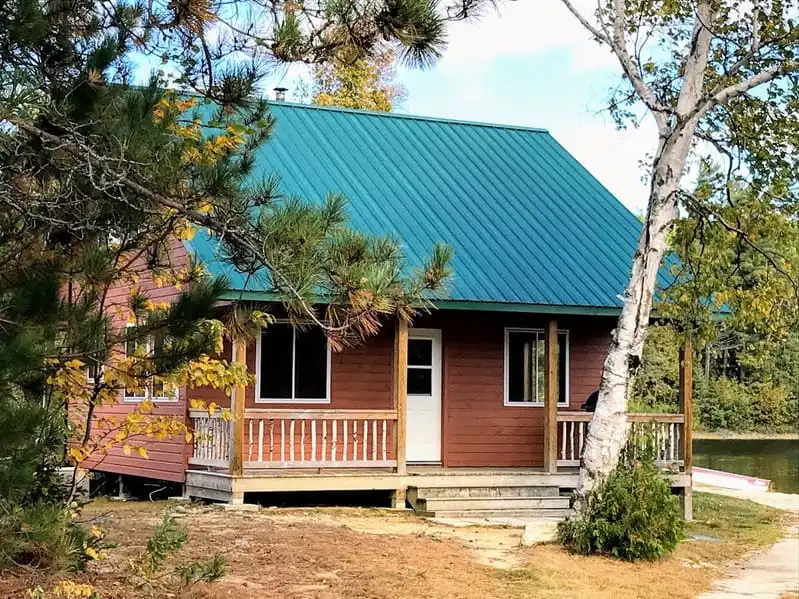
Main Camp Offers Drive-In Convenience: A drive-in main camp suits guests who want privacy without giving up easy comforts. Its housekeeping cabins sit at the south end of the lake near the lodge building. This self-catering accommodation comes with three-piece bathrooms, propane stoves and fridges, wood stoves and satellite internet. The trade-off is having other guests within a short walk.
Outpost Camps Trade Convenience for Seclusion: An outpost camp deeper on the lake suits groups who want the most privacy a fishing trip can offer. Every outpost has hot running-water showers, and a three-cabin island outpost works well for larger private groups. The trade-off is distance from the main lodge, so arrival usually involves a boat ride and careful packing.
Steady Fishing and Good Company Shape Each Day
Three Naturally Reproducing Species Share the Lake: A Quebec fishing camp on a protected lake can give you walleye, northern pike and lake trout in the same water without stocking. Walleye of 14 to 21 inches provide the everyday action, and pike commonly run 24 to 32 inches. Boats, motors and a lake orientation are ready when you arrive.
Time with Family and Friends Comes Easily: Long, unscheduled days give fathers, sons, brothers and old fishing partners time to talk that busy weeks rarely allow. Shore lunches on a sand beach break up the fishing, and families visiting from mid-July to mid-August add swimming and paddling. Evenings at the cabin often run late without anyone checking the time.
Lasting Value from Water Protected by Law
Provincial Rules Keep Breeding Walleye Swimming: A walleye slot enforced by provincial law protects the fish that drive future spawning for every angler on the water. Since 2010, walleye between 14.5 and 21 inches must go back, and winter fishing is not permitted. Guests release big pike and lake trout as well, so the lake stays worth returning to.
Postponed Trips Tend to Stay Postponed: Waiting for a quieter year rarely works, because routines refill whatever space you leave them. Prime summer weeks often go to returning groups who book year after year, and family schedules tighten as children grow. Each season that slips past is one fewer week on the water, and busy calendars do not hand it back.
Practical Points for Picking the Right Camp
Matching the Camp to Your Group Matters: A Quebec fishing camp works best when the accommodation suits your group as well as the fishing does. Group size, privacy, cooking plans and how connected you want to stay all shape the choice between main camp and an outpost. A few practical details then make the week run smoothly.
- Groups wanting the most privacy usually do best at an outpost.
- Main camp cabins suit guests who like a vehicle close by.
- Pack a sleeping bag and towel along with your tackle.
- Buy a Quebec fishing licence before you reach the lake.
- Plan every meal before leaving, since the last town is far behind.
Days That Answer to Nobody but You
A Quebec fishing camp gives you days shaped by the weather and the bite instead of a schedule. You can fish from first light, nap after a shore lunch or spend an afternoon talking on the beach. Postponing only hands that time back to the routine. Get in touch to choose your camp and book your dates.