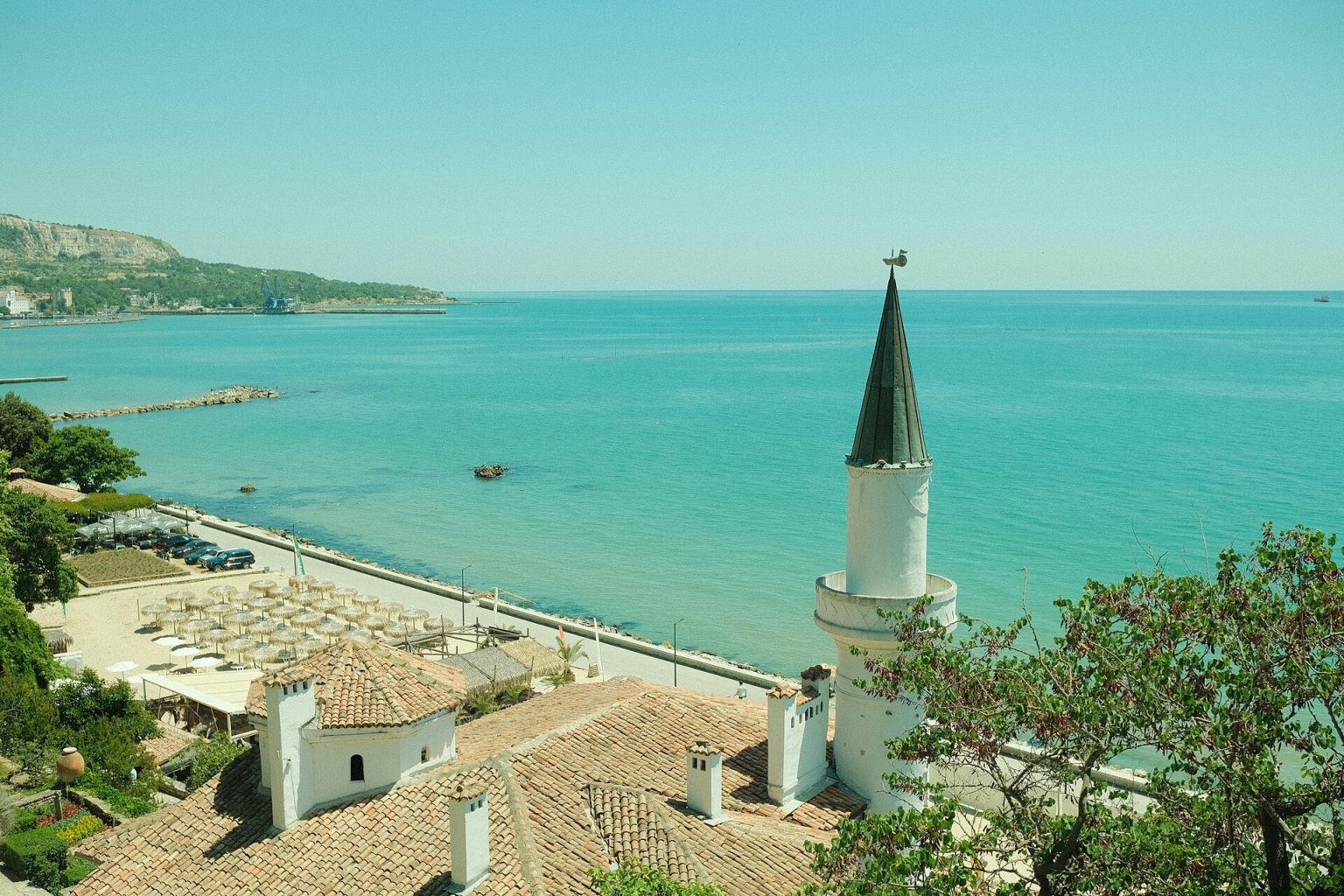

The Mediterranean has always been a region of dry summers, and its civilisations became ingenious about water long before Rome built its aqueducts. What is changing now is the degree. The basin is warming faster than the global average, heatwaves arrive earlier and stay longer, and winter rains, which refill the reservoirs and aquifers everything depends on, are becoming less reliable across both the European and African shores. The result is a slow tightening that farmers feel in their wells, cities feel in their restrictions, and ecosystems feel in rivers that no longer reliably reach the sea.
Scientists describe the Mediterranean as a climate hotspot, and the observations support the label. Data from agencies such as NOAA show regional temperatures already well above pre-industrial levels, with projections pointing to substantially hotter and drier summers by mid-century under current policies. Sea temperatures have set repeated records, fuelling intense storms when the summer heat finally breaks. For readers of our climate coverage, the significant point is the combination: it is not only that heat is rising, but that it coincides with peak demand, from agriculture, from cities, and from the tens of millions of tourists who arrive exactly when water is scarcest.
A Sea Surrounded by Thirst
Farming sits at the sharp end of the squeeze, because agriculture consumes the large majority of the region’s freshwater. Across Spain, Italy, Greece, Morocco, Algeria and Tunisia, growers of citrus, olives, vegetables and vines are adapting in ways both technical and painful. Drip irrigation, which delivers water to roots rather than fields, has spread widely and saves a great deal, though researchers warn it can backfire when efficiency gains are spent on expanding the irrigated area. Farmers are shifting planting dates, adopting drought-tolerant varieties, and in the driest districts abandoning thirsty crops altogether, decisions that ripple into rural employment and food prices across the region.
Groundwater is the hidden casualty. When rains fail and rivers run low, everyone drills, and aquifers that took centuries to fill are drawn down in years. Wells deepen, water grows saltier near coasts as the sea intrudes, and small farmers who cannot afford deeper boreholes lose out to larger operators who can.
Farming at the Sharp End
Cities and regions are responding with a mixture of engineering and discipline. Leakage reduction is the unglamorous star: in some Mediterranean networks a third of treated water never reaches a tap, and fixing pipes yields new supply cheaper than any dam. Wastewater reuse for parks and agriculture is expanding, desalination plants are multiplying along the North African and Spanish coasts despite their energy costs, and drought plans now spell out restrictions in advance rather than improvising them mid-crisis. Tourist centres, conscious that their economies depend on appearing untouched by scarcity, are investing in their own supplies and asking visitors, politely, to use less.
The politics are as difficult as the engineering. Water crosses borders in shared rivers and aquifers, and within countries it pits city against countryside, region against region, and present consumption against future security. Pricing is contentious everywhere: water priced too cheaply is wasted, water priced honestly can be unaffordable for the poor and for small farms. The most successful reforms tend to combine firm limits on total extraction with protection for basic needs, and to be negotiated before the drought year rather than during it, when every negotiation becomes an emergency.
How Cities and Regions Are Responding
None of this amounts to a counsel of despair. The Mediterranean’s long history with scarcity is an asset as well as a warning: terraced hillsides, cisterns, qanats and centuries of water law show societies that organised themselves around limits and thrived. The modern toolkit, satellite monitoring of aquifers, smart meters, drought-resistant agronomy, regional cooperation on river basins, is far more powerful than anything those societies had. The question is whether institutions will use it at the speed the climate is now moving.
For the people of the region, the stakes are not abstract. They are measured in whether the olive harvest comes in, what a hotel pays for water in August, and whether a village well holds through September. Heat and water stress will define the Mediterranean’s next decades more than almost any other force, and the choices being made now, in ministries, on farms and at kitchen tables, will decide how hard that definition bites. Follow the continuing story in the Blog section.