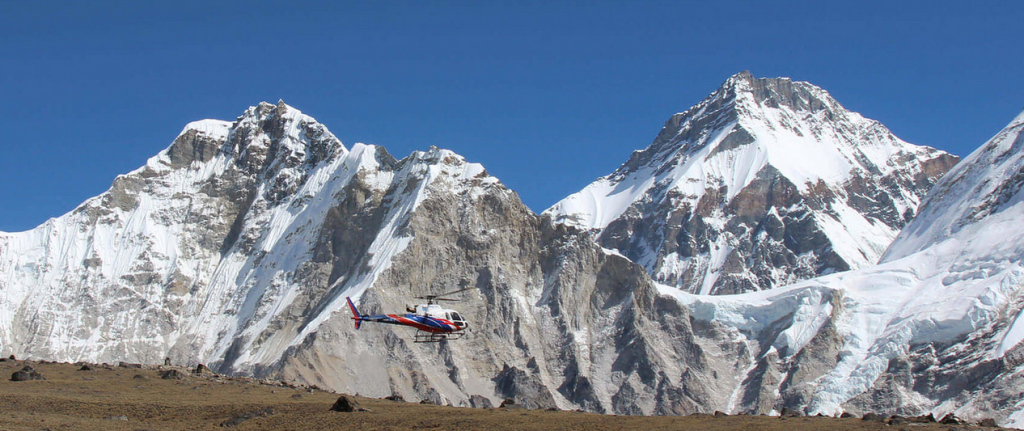
One of the most feasible and thrilling ways of exploring the Everest region is the EBC Heli Return Trek. It is a mixture of adventure trekking at Everest Base Camp and the comfort of helicopters transporting you directly to Kathmandu, thus being the perfect choice for the traveller who would wish to have the traditional Everest experience but not to spend the additional days walking the same trail back to Kathmandu. The trek provides breathtaking mountainous landscapes, traditional Sherpa life, renowned Himalayan villages, and the invaluable experience of setting foot on one of the most iconic trekking spots in the world.
- Understanding the EBC Heli Return Trek
- Choosing the Best Time for the Trek
- Choosing the Right Itinerary
- Understanding the Cost
- Permits and Documentation
- Flights and Helicopter Logistics
- Physical Preparation
- Packing for the Trek
- Travel Insurance
- Guided Trek or Independent Travel
- Altitude Safety and Health Considerations
- Accommodation and Food Along the Route
- Conclusion
An EBC Heli Return Trek is a high-altitude Himalayan adventure that needs to be planned carefully due to its flights, trekking logistics, permits, physical preparation, weather planning, and health factors. A carefully thought-out vacation enhances security and saves one a lot of needless stress, and makes the whole process much more enjoyable.
Understanding the EBC Heli Return Trek
The EBC Heli Return Trek is based on the traditional Everest Base Camp route, except that the trek back is substituted with a helicopter flight. This expedition starts in Kathmandu and then flies to Lukla at around 2,860 m (9,383 ft), which is the primary access point to the Everest region. It is there that trekkers walk through beautiful Himalayan sceneries, crossing suspension bridges, walking through forests, passing Buddhist monasteries, and lodging in traditional Sherpa villages.
The path rises slowly up through the key trekking spots to the Everest Base Camp at about 5,364 m (17,598 ft). Kala Patthar at 5,545 m (18,192 ft) is also hiked by many trekkers, and provides one of the best close-up panoramic views of Mount Everest. Rather than having to walk all the way back to Lukla, passengers in the upper Everest area are flown in a helicopter to Kathmandu. This lowers the overall time taken during the trip and at the same time maintains the essence of the Everest trekking experience.
Choosing the Best Time for the Trek
One of the most essential components of the EBC Heli Return Trek planning is the time of year, since treks and flights are influenced by weather conditions. The Everest area is subject to significant seasonal variations, and the timing of the selection can be a really big factor.
One of the most suggested seasons is spring, which is in March-May. The climate is usually milder than in winter, skies are usually clear, and mountain visibility is great. The lower parts of the trekking route are also lively with rhododendron forests, which are in blossom, thus the entire trail is particularly picturesque.
Another perfect season is autumn, from September through November. Once the monsoon rains are swept away, the air gets cleaner, and the mountain views are excellent. The conditions of the trail tend to be consistent, and flight activities are mostly more stable.
The winter, which falls between December and February, is possible, but colder, particularly at higher elevation whereby the temperatures could be harsh due to freezing. The least preferred time is the monsoon season (June-August) since heavy rain, slippery paths, poor visibility, and frequent flight delays may make traveling plans complicated.
Choosing the Right Itinerary
An ideal itinerary is needed to have a safe EBC Heli Return Trek since altitude gain should be taken into consideration. This walk must never be in a hurry because the faster one goes to the mountain, the more he or she is likely to be affected by altitude sickness.
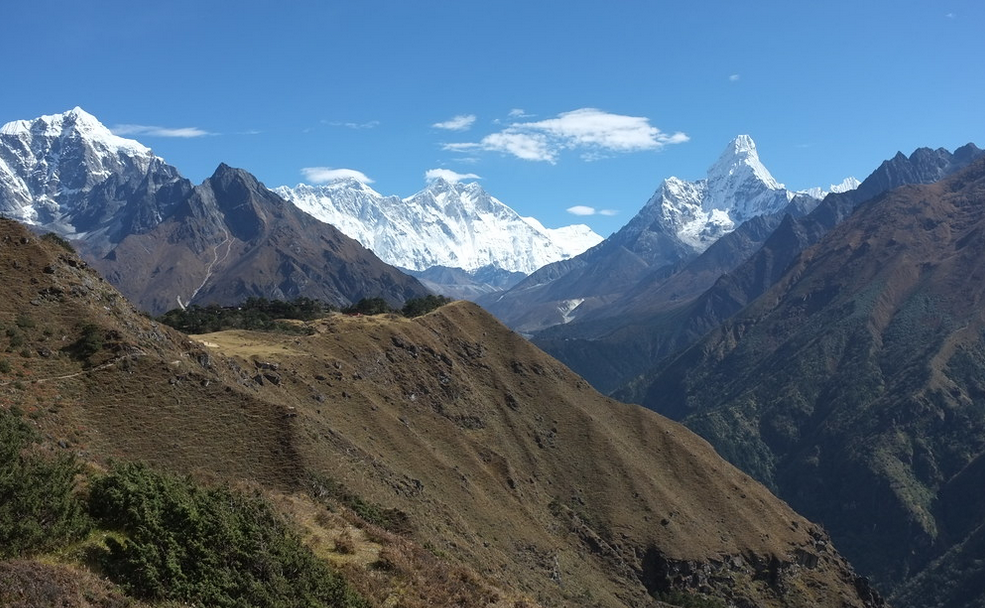
The trip normally begins with a Kathmandu to Lukla flight, but in peak seasons, flights can also be made between Ramechhap instead. In Lukla, trekkers typically traverse Phakding at an altitude of about 2,610 m (8,563 ft) and Namche Bazaar at an altitude of around 3,440 m (11,286 ft), the primary acclimatization center.
It proceeds through Tengboche (around 3,867 m (12,687 ft), where it is common to include another acclimatization stop), at an elevation of about 3,867 m (12,687 ft), with its monastery and mountain views, and then to Dingboche (about 4,410 m (14,469 ft)). It is here that trekkers proceed to Lobuche at about 4,940 m (16,207 ft) and Gorak Shep at about 5,164 m (16,942 ft) before getting to the Everest Base Camp. The helicopter will make a trip back after visiting Kala Patthar (where applicable).
Understanding the Cost
Compared to a regular Everest Base Camp trek, the EBC Heli Return Trek is more expensive as helicopters in the Himalayas are very expensive. Nonetheless, the greater cost is usually worth it to tourists who are in need of time and less physical effort to go down the path.
The packages of shared helicopter returns usually start at USD 2,200 to USD 3,200 per individual. Mid-range can be between USD 3,200 and USD 4,800 based on accommodation standards and services offered. Premium lodges and upgraded versions are luxurious, and they can cost more than USD 5,500.
The most common packages consist of permits, domestic flights, accommodation, meals, guide services, porter support, and helicopter return. Other personal costs like Wi-Fi, charging, snacks, hot showers, equipment rental, travel insurance, and tips are to be added to the final budget.
Permits and Documentation
Any traveler who plans to do an EBC Heli Return Trek must have the right permits prior to entering the Everest region. Such permits are compulsory both in conservation and local administration.
An entry permit to the Sagarmatha National Park is necessary since the Everest Base Camp is located in a national park zone of Nepal. A Khumbu Pasang Lhamu Rural Municipality Permit is also needed by Trekkers and is applicable to the local area of Everest.
Trekking agencies do much of the work in arranging permits on behalf of their clients, so it becomes simpler. Permits can be arranged separately by independent trekkers, but it is always prudent to be aware of the most recent regulations before going.
Flights and Helicopter Logistics
An important component of the EBC Heli Return Trek is transportation planning. The journey traditionally starts with a domestic flight to Lukla, but during high trekking seasons, the flights are usually rerouted to Kathmandu or Ramechhap because of air traffic congestion.
This could involve a pre-mountain flight road transfer in the early morning. The weather of the Everest region is unpredictable, and even during the busiest seasons, there is often a delay or cancellation.
The helicopter return typically leaves Gorak Shep at about 5,164 m (16,942 ft) but may be adjusted to suit the needs of operations and the weather. It is strongly advisable to have one or two flexible buffer days in Kathmandu.
Physical Preparation
Even though the helicopter will eliminate the trek back part, the EBC Heli Return Trek is still physically challenging. The trekkers also take several days to climb the mountain terrain, which is tough and difficult, whilst struggling with the thin air.
The average hours spent walking are five to eight hours each day, depending on the schedule and personal pace. The trek could be made much more comfortable with prior preparation.
The most helpful are the cardio exercises, hiking, climbing the stairs, walking with a backpack of a certain weight, cycling, and the endurance exercises. Mental conditioning is also crucial since Himalayan trekking involves patience, endurance, and adaptability.
Packing for the Trek
To go on an EBC Heli Return Trek, you have to pack correctly since the weather in the mountains changes rapidly and the temperature at different altitudes is different.
The best way is layered clothing. The basic equipment needed will be thermal garments, insulated jackets, waterproofs, trekking pants, gloves, warm hats, good trekking boots, sunglasses, sunscreen, reusable water bottles, and trekking poles.
Due to the weight restrictions of the bags carried in helicopters, it is significant to pack efficiently. It is pointless to come up with things that do not add value.
Travel Insurance
One of the key elements of an EBC Heli Return Trek planning is appropriate travel insurance, since it is very costly to deal with emergencies in the remote mountain areas.
Travelers are to make sure that their policy involves trekking at least 5,545 m (18,192 ft) and helicopter evacuation and emergency medical treatment. High altitude adventure coverage might not necessarily be covered in the standard travel insurance.
Emergency rescue is expensive, and without appropriate insurance, it can be a financial burden. It is important to review the information regarding the policy before leaving.
Guided Trek or Independent Travel
The decision to go with a guided or an independent travel is a crucial planning factor in an EBC Heli Return Trek. Guided trekking makes it easier, as accommodation, permits, transport, guides, porters, and helicopter arrangements are dealt with by professionals.
Independent trekking is more flexible and may occasionally save some of the expenses, yet it involves more responsibility, organization, and trust in logistical management. In the case of first-time Everest travelers, guided travel tends to be more convenient and stress-free.
Altitude Safety and Health Considerations
The most severe problem that occurs during an EBC Heli Return Trek is altitude. With an increase in altitude, the oxygen becomes thinner, and even a normal walk becomes more strenuous.
The effects of altitude sickness can include headache, nausea, dizziness, insomnia, fatigue, and lack of appetite. Prevention involves slow rise, hydration, adequate acclimatization and nutrition.
Not paying attention to symptoms is risky. Serious ones must be descended at once. During the trek, it is crucial to listen to guides and keep track of physical state.
Accommodation and Food Along the Route
The EBC Heli Return Trek does not include accommodation beyond the mountain, but the EBC is typically accommodated in teahouses, simple mountain lodges that provide convenient shelter and meals.
The rooms are typically simple, particularly at an elevation higher than the supplies can be easily carried. The common eating areas are cozy and allow the trekkers to rest.
Foods typically comprise dal bhat, noodles, rice, potatoes, pasta, eggs, soups, and hot drinks. The higher the altitude, the higher the prices since transportation will be costly.
Final Preparation Before Departure
The preparation can be finalized, making the trip a lot easier. It is recommended that anyone arriving in Kathmandu a few days before departure (at least one or two) will have time to check gear, rest, and deal with unforeseen shifts.
The tourists are advised to bring along some Nepalese cash as the electronic payment systems are not reliable in the isolated parts. Documents such as passports, permits, insurance documents, and emergency contacts should always be at hand. It should be flexible since the Himalayan travel is considered by weather delays.
Conclusion
There is no better way for tourists to have an adventure, an efficient and convenient experience of Everest than the EBC Heli Return Trek. It is a combination of the traditional success of walking to Everest Base Camp and the additional fun of gliding in a helicopter back across the Himalayas.
This trip is an unbelievable once-in-a-lifetime experience when properly planned and well prepared, with the focus given to safety, one will be transported to the Everest core and back to Kathmandu.